Luxury interiors are no longer defined only by expensive materials, oversized chandeliers, heavy furniture, or dramatic decorative elements. Today, true luxury is about clarity, comfort, detailing, and a space that feels intentionally planned. A premium home should not just look impressive in photographs. It should work beautifully in daily life.
This is where modern luxury interiors are evolving. Homeowners now want spaces that feel elegant without being excessive. They want warmth without clutter, character without chaos, and sophistication without making the home feel overdesigned. The focus has shifted from adding more to choosing better.
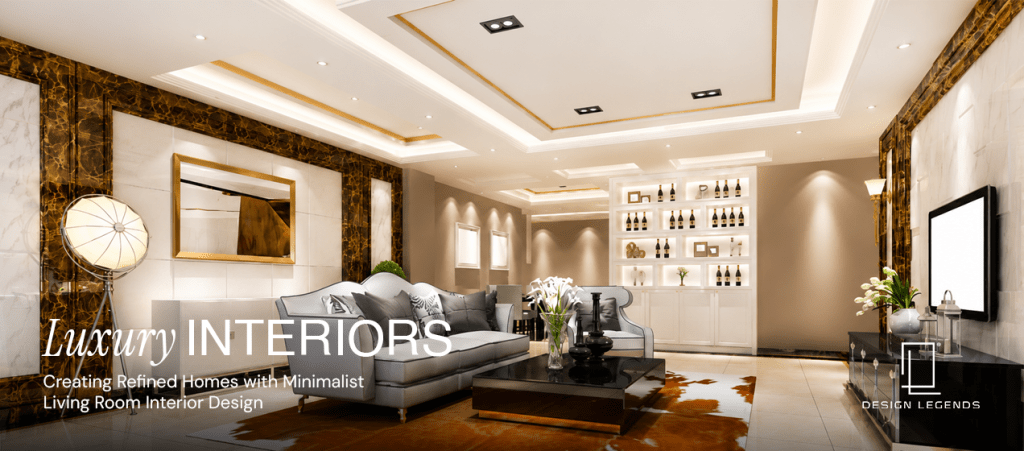
For many premium homes, the living room becomes the most important space. It is where guests form their first impression. It is where the family gathers. It is also the area that sets the tone for the rest of the home. That is why minimalist living room interior design has become a strong direction within luxury interiors.
Minimalism does not mean plain, empty, or cold. When handled correctly, it creates balance. It allows furniture, lighting, finishes, textures, and proportions to breathe. It gives every element a reason to exist. In a luxury home, that restraint can often feel more powerful than visual excess.
What Makes Luxury Interiors Truly Premium?
Luxury interiors are built on planning, not just styling. A marble wall, designer sofa, imported light, or custom cabinet can add value only when it belongs to a larger design language. Without proportion, alignment, circulation, lighting, and detailing, even expensive interiors can feel disconnected.
A well-designed luxury interior focuses on:
Purposeful space planning
Every zone should support the way the homeowner lives. The living room, dining area, bedrooms, kitchen, entertainment space, and private zones should connect naturally without feeling forced.
Material intelligence
Luxury does not always mean using the most expensive material everywhere. It means choosing the right material for the right surface. Stone, wood, metal, fabric, glass, and wall finishes should work together instead of competing for attention.
Controlled detailing
Premium interiors are often defined by what is not immediately obvious. Clean junctions, aligned grooves, balanced ceiling lines, concealed storage, refined lighting, and furniture proportions create the real difference.
Comfort and usability
A luxury home should feel good to live in. If the sofa is uncomfortable, lighting is harsh, storage is inadequate, or movement feels restricted, the space fails despite looking beautiful.
This is why luxury interiors need a disciplined design process. The goal is not to fill the home with premium objects. The goal is to build a space where every object, surface, and detail contributes to one complete experience.
Why Minimalist Living Room Interior Design Works in Luxury Homes
Minimalist living room interior design works well in premium homes because it removes visual noise. It gives importance to proportion, light, texture, furniture scale, and curated decor. Instead of making every corner loud, it allows the room to feel calm and intentional.
In a luxury living room, minimalism creates three major advantages.
First, it makes the space look larger and more open. When furniture placement is controlled and unnecessary items are removed, the room feels more expansive.
Second, it makes premium materials stand out. A beautiful stone wall, handcrafted wooden panel, sculptural sofa, or statement light gets more attention when the surrounding elements are not fighting for focus.
Third, it creates a timeless aesthetic. Overdecorated spaces often age quickly because they follow temporary trends. Minimalist luxury interiors usually stay relevant longer because they rely on clean design principles.
The best minimalist living rooms do not feel empty. They feel edited. Every piece has weight, function, and placement.
Key Elements of a Luxury Minimalist Living Room
A successful living room needs balance. It should feel premium, but not stiff. It should look clean, but not lifeless. It should have character, but not clutter.
1. A Strong Layout Comes First
Before selecting finishes or furniture, the layout must be locked. Seating placement, TV wall position, centre table size, side tables, accent chairs, movement space, and lighting points should be planned together.
In luxury interiors, poor layout is one of the biggest mistakes. A large sofa may look premium in a showroom but feel oversized at home. A centre table may look stylish but block circulation. A TV wall may look grand but fail if the seating distance is wrong.
A luxury living room needs proper zoning. The main conversation area, entertainment zone, display area, and transition spaces should work smoothly. Minimalism makes this even more important because fewer elements mean every mistake becomes more visible.
2. Use a Refined Material Palette
Minimalist living room interior design depends heavily on material selection. Since there are fewer decorative layers, the quality of finishes becomes more important.
A refined palette may include natural stone, warm wood, textured wall finishes, soft upholstery, brushed metal, glass, and subtle fabric detailing. The key is not to use all of them at once. The key is to create a controlled combination.
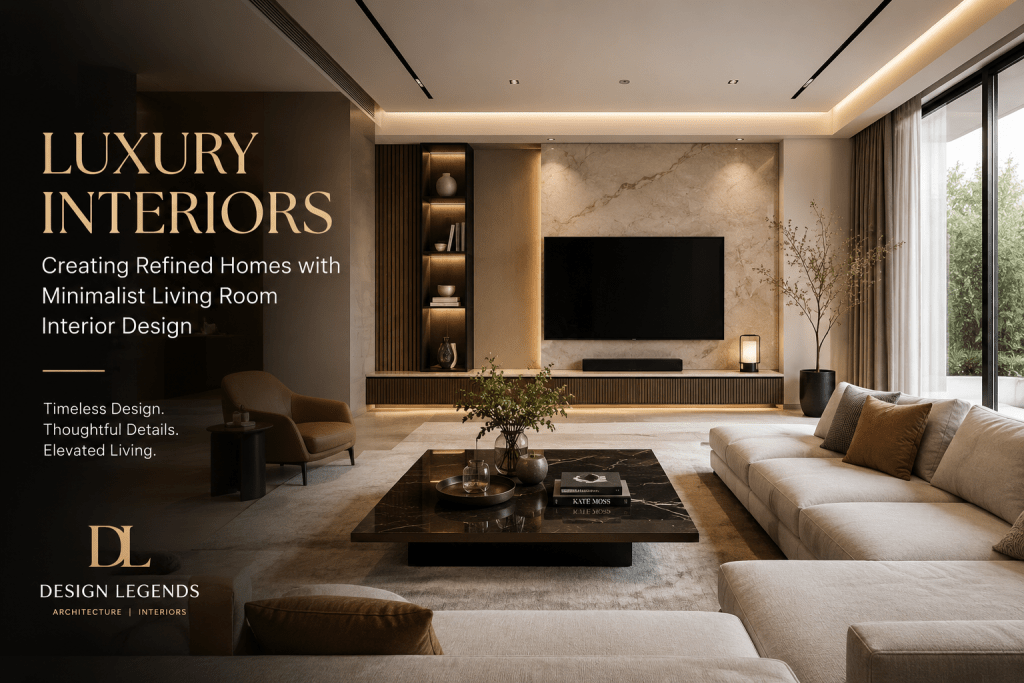
For example, a beige stone wall can be paired with walnut wood, soft neutral upholstery, and warm lighting. This creates depth without making the room feel heavy. Similarly, a monochrome palette can be elevated with texture, not extra colour.
Luxury interiors need material harmony. If every surface tries to become the highlight, the space loses maturity.
3. Focus on Furniture Proportion
Furniture can make or break a living room. In luxury interiors, furniture should not only look beautiful. It should fit the room’s scale.
A minimalist living room usually works best with fewer but stronger furniture pieces. One well-proportioned sofa can look better than multiple seating units. A single sculptural lounge chair can add more value than several decorative chairs. A clean centre table with the right size can anchor the room without making it feel busy.
The height, depth, width, fabric, and placement of each furniture piece should be studied properly. Luxury is not in overcrowding the space. Luxury is in allowing the right pieces to command attention.
4. Keep the Colour Palette Controlled
Minimalist luxury interiors often use neutral, earthy, muted, or monochromatic palettes. This does not mean the room has to be boring. A controlled palette helps create a calm base, while texture and detailing add richness.
Popular colour directions include the following:
Cream and warm beige
Taupe and walnut
Charcoal and stone grey
Ivory and brushed gold
Soft greige and natural oak
White, black, and muted bronze
Accent colours can be used, but they should be intentional. A deep green chair, rust-toned artwork, or muted blue cushion can work beautifully if the rest of the room is balanced.
In premium homes, colour should not feel random. It should support the overall mood.
5. Lighting Should Be Layered
Lighting is one of the most critical parts of luxury interiors. A living room should not depend on one central ceiling light. It needs layers.
Ambient lighting creates general brightness. Accent lighting highlights artwork, wall panels, niches, or textures. Task lighting supports reading or focused activity. Decorative lighting adds personality.
In minimalist living room interior design, lighting should be soft, warm, and well-positioned. Cove lights, wall washers, concealed strip lights, floor lamps, pendant lights, and table lamps can all work if placed with discipline.
Bad lighting can make premium materials look flat. Good lighting can make simple materials look expensive.
6. Use Decor with Restraint
Decor should complete the room, not overwhelm it. In luxury interiors, every decor piece should feel selected, not randomly added.
A large artwork, a sculptural vase, a curated coffee table book, a textured rug, or a single statement object can be enough. The goal is to create visual interest without filling every surface.
Minimalist decor works best when there is negative space around it. That space allows each object to stand out.
This is also where many homes go wrong. Too many cushions, too many frames, too many accessories, and too many patterns can make even an expensive room feel ordinary.
Luxury Interiors Are About Detailing
The real quality of luxury interiors is visible in the details. A clean wall-to-ceiling junction, perfectly aligned panel grooves, hidden storage, well-planned switchboards, seamless curtain tracks, and balanced ceiling proportions can quietly elevate the entire room.
In a minimalist living room, detailing becomes even more important because there is less visual distraction. Poor finishing cannot hide behind heavy decor. Every line needs clarity.
This includes:
TV wall alignment
Panel spacing
False ceiling depth
Lighting placement
Curtain fall
Flooring pattern
Furniture edges
Hardware finish
Storage integration
Wall finish consistency
Luxury is not always loud. Often, it is the quiet confidence of a space that has been properly resolved.
Common Mistakes to Avoid in Luxury Living Rooms
Many homeowners invest heavily in interiors but still end up with spaces that feel incomplete. The reason is usually not budget. It is poor decision-making.
Avoid these mistakes:
Using too many statement elements in one room
Choosing oversized furniture
Adding luxury materials without a design direction
Ignoring lighting layers
Copying trends without checking suitability
Leaving storage unplanned
Using decor to cover planning mistakes
Creating a living room that looks good but feels uncomfortable
Luxury interiors need clarity from the beginning. Once the core planning is wrong, styling cannot fully repair it.
How Design Legends Approaches Premium Interior Spaces
Design Legends works in the luxury architecture and interior design space with a focus on precision, purpose, and end-to-end execution. The brand presents itself as a concept-to-completion design firm, creating bespoke spaces across India.
For a luxury home, this matters because interiors cannot be treated as surface decoration. Architecture, interior planning, furniture, lighting, materials, and execution need to work as one system.
A living room, for example, should not be designed only after the structure is complete. Wall proportions, window placement, ceiling levels, electrical points, furniture scale, and lighting design should be planned early. This prevents on-site compromises later.
That is how premium interiors achieve long-term value. The space looks refined because the thinking behind it is refined.
Final Thoughts
Luxury interiors are moving toward a more intelligent and restrained design language. The best homes today are not the ones with the most expensive finishes. They are the ones where every detail feels considered.
Minimalist living room interior design is a strong example of this shift. It proves that luxury does not need clutter. It needs proportion, planning, material depth, lighting, comfort, and control.
For homeowners who want a premium space that feels timeless, minimalism can be a powerful direction. It allows the living room to feel open, elegant, and deeply personal without becoming visually heavy.
A well-designed luxury living room should not only impress guests. It should improve the way the home feels every single day.
FAQs
1. What are luxury interiors?
Luxury interiors are high-quality, thoughtfully planned spaces that combine premium materials, refined detailing, comfort, functionality, and a strong design language.
2. Is minimalist living room interior design suitable for luxury homes?
Yes. Minimalist living room interior design works very well in luxury homes because it creates openness, visual clarity, and timeless sophistication.
3. How can a living room look luxurious without too much decor?
Use better materials, controlled lighting, well-proportioned furniture, refined textures, and fewer but stronger decor pieces.
4. Which colours work best for minimalist luxury interiors?
Warm neutrals, beige, taupe, ivory, walnut, grey, charcoal, muted metallics, and earthy tones work well for minimalist luxury interiors.
5. Why is detailing important in luxury interiors?
Detailing improves finish quality, alignment, usability, and long-term visual appeal. It is often what separates premium interiors from average ones.