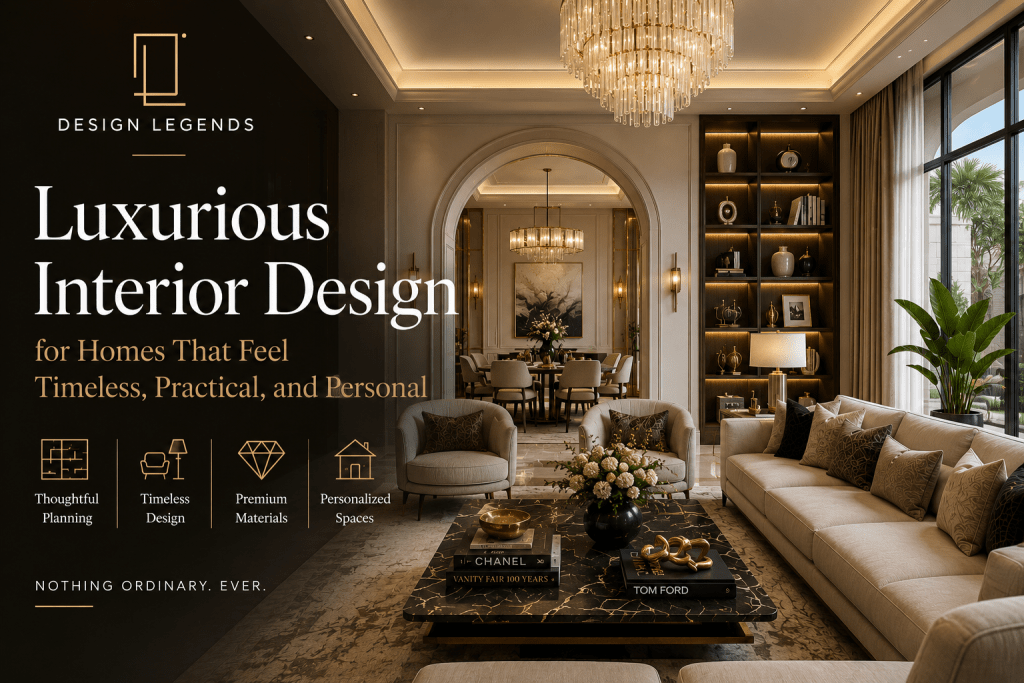
Luxurious interior design is not only about expensive materials, large spaces, imported furniture, or dramatic décor. True luxury begins much earlier. It starts with how a home is planned, how each space is used, how light enters the rooms, how materials are selected, and how every detail is executed on site.
At Design Legends, luxurious homes are approached with a clear design process where architecture, interiors, detailing, and execution work together. The aim is not just to create homes that look premium but homes that feel refined, function smoothly, and continue to stay relevant for years.
A luxurious home should not only look impressive in photographs. It should feel calm when you enter, work beautifully every day, and reflect the people who live in it. That is where thoughtful architectural services and interior planning make a real difference.
For homeowners looking for professional design support, the real question is not just “How do I make my home look luxurious?” The better question is, “How do I create a home that feels premium, works beautifully, and does not become outdated quickly?”
This blog explains how good planning, technical clarity, material discipline, and execution control shape a high-end home from the inside out.
What Luxurious Interior Design Really Means
Many people associate luxury with visual richness. Marble, chandeliers, brass details, large sofas, expensive lights, and designer furniture often become the first things that come to mind. These elements can be part of a premium home, but they are not the foundation of luxury.
Core Elements of Luxury
A truly refined home is built on clarity. The layout should make sense. The rooms should be proportioned well. Furniture should not feel forced. Storage should be planned properly. Lighting should support the mood of each space. Materials should age well. Services such as air conditioning, electrical points, plumbing lines, and ceiling systems should be integrated cleanly.
This is the kind of design thinking Design Legends focuses on while planning premium residences. Luxury is not treated as surface-level decoration. It is treated as a complete system where every decision affects the final experience of the home.
When all these things come together, the result feels effortless. That effortless feeling is usually the outcome of very careful decisions made before execution begins. Good design does not scream for attention. It creates comfort, order, and confidence.
Luxurious Interior Design Starts With Spatial Clarity
Luxurious interior design depends heavily on how space is organised. Even a large home can feel uncomfortable if the zoning is weak. At the same time, a compact space can feel premium if the planning is sharp.
Spatial Clarity
Spatial clarity means every area has a defined purpose. The entrance should not directly expose the private living areas. The formal drawing room should feel separate from daily family spaces. Bedrooms should have privacy. Kitchens and service areas should function without disturbing the main living experience. Staff movement, guest access, and family circulation should be planned with care.
Transitions Matter
In premium homes, transitions matter. The foyer, passage, lobby, staircase, family lounge, dining area, and private rooms should not feel randomly connected. Each space should guide the user naturally from one area to another.
At Design Legends, this planning clarity becomes a core part of the design process. The home is not planned room by room in isolation. It is planned as one connected experience where privacy, comfort, movement, and visual flow are considered together. This is not just about beauty. It is about control. A well-planned home feels calm because nothing feels accidental.
Why Planning Comes Before Decoration
The biggest mistake in high-end homes is starting with finishes before fixing the planning. A beautiful material cannot correct a poor layout. Expensive furniture cannot solve bad circulation. Decorative lights cannot hide weak ceiling planning.
Before selecting marble, veneer, fabric, or wall finishes, the design team must understand how the home will be used.
Important Planning Questions
- Who uses the home daily?
- How many guests are expected regularly?
- Which areas need privacy?
- Where should storage be hidden?
- How much natural light does each room receive?
- How should formal and informal spaces be separated?
- Where will services and maintenance access be placed?
This is where architectural thinking becomes important. A luxury home is not just styled. It is engineered for lifestyle, movement, comfort, and long-term use. When planning is done well, the interiors become stronger automatically.
The Role of Proportion in Luxury Homes
Proportion is one of the most underrated parts of interior design. A room may have costly finishes, but if the ceiling height, furniture size, window scale, or wall composition is wrong, the space will still feel off.
Why Proportion Matters
Luxury depends on proportion more than decoration. A large room needs furniture that can hold the scale. A low ceiling needs careful lighting and clean horizontal lines. A double-height space needs visual anchoring. A long passage needs rhythm and purpose. A bedroom should not feel overcrowded with oversized furniture. Even the size of a TV unit, the thickness of wall panels, the height of a headboard, and the placement of artwork affect the final experience.
Good designers do not place elements randomly. They study the volume of the room and design each feature according to its scale. When the proportion is correct, the space feels balanced without needing excessive décor.
Material Selection Should Be Intentional
Premium interiors often fail when too many materials are used without discipline. Marble, wood, metal, glass, fabric, leather, stone, wallpaper, and paint can all look beautiful individually. But when they are used together without control, the home can start looking busy.
Material Discipline
Each material should have a reason. Marble may be used to create permanence. Wood can add warmth. Metal can define sharp detailing. Fabric can soften the mood. Stone can bring texture. Glass can create openness.
The goal is not to use everything. The goal is to use the right combination. A refined home usually has a controlled palette. The same family of materials may continue across different spaces, with slight variations based on function. This creates visual continuity.
At Design Legends, material decisions are not made only for visual impact. They are studied for durability, maintenance, climate suitability, texture, and how they will age inside the home. Material selection should also consider maintenance. A home is not a showroom. It has to handle daily life. The best materials are not just attractive; they are practical, durable, and suitable for the client’s lifestyle.
Lighting Defines the Mood of a Premium Home
Lighting can make or break a luxury interior. Even the best materials can look flat under poor lighting. A well-designed lighting plan creates depth, warmth, and atmosphere.
Lighting Layers
- Ambient lighting gives general brightness
- Task lighting supports specific activities
- Accent lighting highlights art, textures, panels, or architectural features
- Decorative lighting adds personality and visual focus
A common mistake is relying only on decorative lights. Chandeliers and pendant lights may look good, but they cannot replace a complete lighting plan. The placement of lights should be coordinated with ceiling design, furniture layout, wall finishes, and electrical planning. If this coordination is missed, lights may fall in the wrong place, shadows may look harsh, and the space may feel uncomfortable. Luxury lighting is not about making everything bright. It is about creating the right mood for each area.